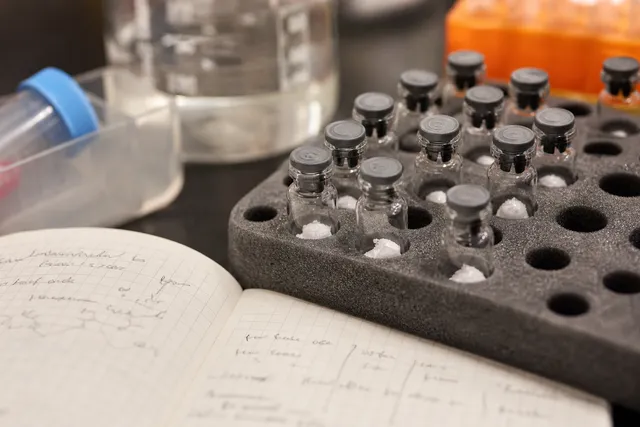
Sermorelin is a synthetic peptide that matches the first 29 amino acids of growth hormone-releasing hormone (GHRH). Researchers study it because it asks the pituitary gland to release growth hormone (GH), instead of supplying GH directly.
CoreVials sermorelin is for laboratory research only, not for human or animal use.
How does sermorelin work?
GHRH is a natural signal from the hypothalamus. Sermorelin copies the active front end of that signal and binds GHRH receptors on pituitary cells.
Those cells then release GH in pulses. Feedback systems (including somatostatin and IGF-1 related signals) can still limit overshoot. That feedback idea is a main reason papers contrast GHRH analogs with direct GH exposure.
What has clinical literature historically studied?
Sermorelin has a longer published history than many newer research peptides. Older clinical literature includes:
- Use as a provocative test of GH release capacity
- Pediatric idiopathic GH deficiency growth studies
- Adult studies measuring GH and IGF-1 responses, including older-adult cohorts
Some adult studies show clear hormone-level changes. Body-composition and function endpoints are more mixed and often come from smaller or shorter trials.
How does it compare with related research tools?
- Tesamorelin is a longer GHRH analog with a large clinical literature in specific visceral-fat research settings.
- CJC-1295 (No DAC) is another GHRH-pathway research analog with different half-life behavior than native GHRH fragments.
- Ipamorelin acts on the ghrelin receptor lane, not the GHRH receptor lane.
For the pairing discussion, see ipamorelin and CJC-1295 research.
Beginner reminder
Hormone changes in a study are not automatic proof of every lifestyle outcome people hope for. Read endpoints carefully. Research materials are not personal treatment plans.
References
- Prakash, A., & Goa, K.L. (1999). Sermorelin: a review of its use in the diagnosis and treatment of children with idiopathic growth hormone deficiency. BioDrugs. PubMed
- Corpas, E., et al. (1992). Growth hormone (GH)-releasing hormone-(1-29) twice daily reverses the decreased GH and insulin-like growth factor-I levels in old men. Journal of Clinical Endocrinology & Metabolism.
- Vittone, J., et al. (1997). Effects of single nightly injections of growth hormone-releasing hormone (GHRH 1-29) in healthy elderly men. Metabolism.