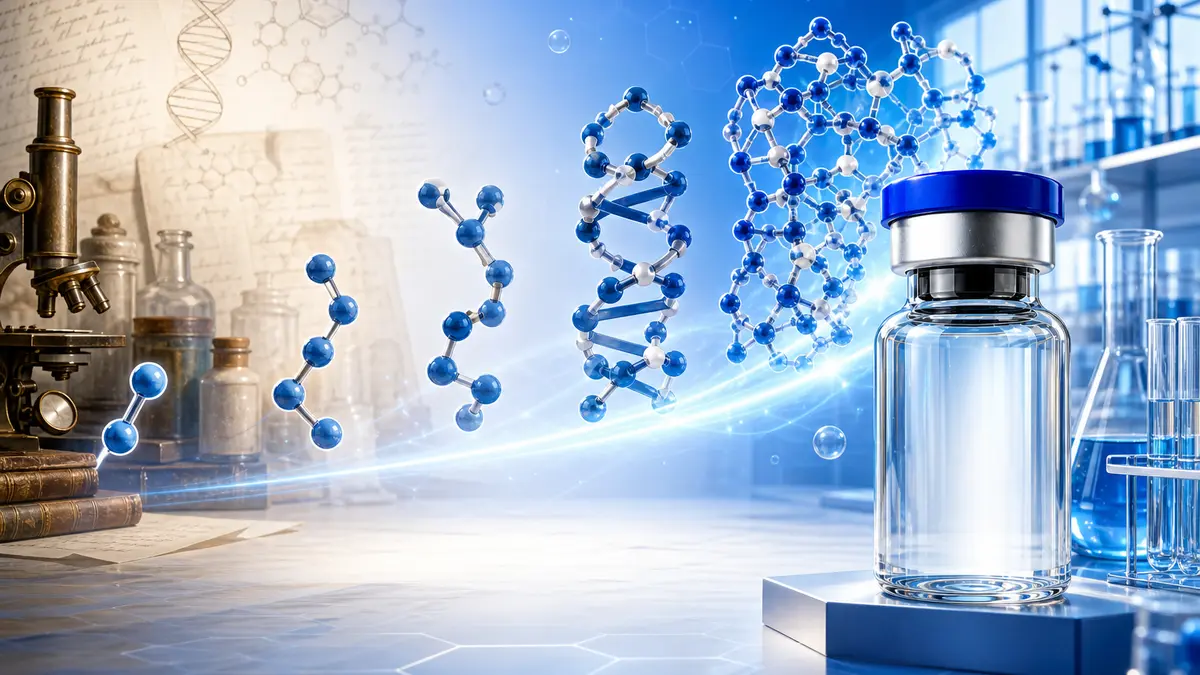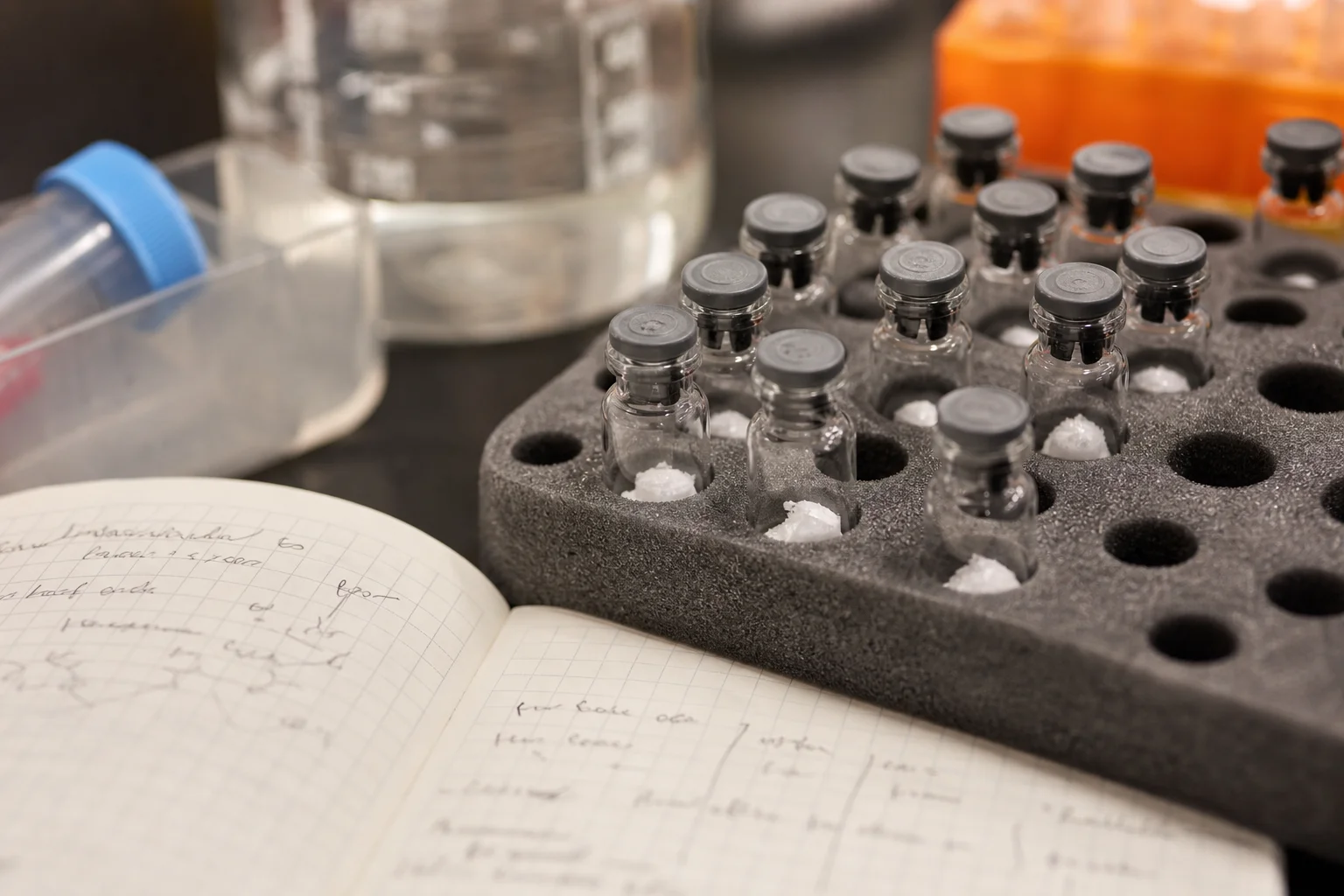
Kisspeptin is one of the most important signaling peptides in reproductive endocrine research, yet most people outside the lab have never heard of it. If you have seen the name on a research supplier site and wondered what it actually does, this guide breaks it down in plain English.
Kisspeptin is studied because it sits near the top of the chain that controls reproductive hormones. It is not a "fitness peptide" or a weight-loss compound. In research settings, it is used to study how the brain and pituitary regulate hormones such as GnRH, LH, and FSH.
As with all research peptides discussed on this site: kisspeptin products sold for laboratory use are not FDA-approved drugs and are not for human or animal consumption.
What Is Kisspeptin?
Kisspeptin is a neuropeptide, meaning it acts as a signaling molecule in the nervous system. It is produced from the KISS1 gene and binds to the KISS1R receptor (also called GPR54).
Researchers often work with specific fragments or forms, including:
- Kisspeptin-10 (Kp-10): a shorter active fragment commonly used in lab and clinical research protocols
- Kisspeptin-54 (Kp-54): the major endogenous form studied for longer-lasting signaling in human research
Both forms are tools for studying the same broader system, but they differ in length, stability, and how researchers use them in experiments.
The HPG Axis: Where Kisspeptin Fits
To understand why kisspeptin matters, picture the hypothalamic-pituitary-gonadal (HPG) axis as a relay race:
- Hypothalamus releases GnRH (gonadotropin-releasing hormone)
- Pituitary responds with LH and FSH
- Gonads (ovaries or testes) produce sex steroids such as estrogen and testosterone
Kisspeptin acts upstream of GnRH. In simple terms, it helps push the "start" signal for the reproductive hormone cascade. That is why so much reproductive biology research routes through kisspeptin pathways.
Why Researchers Study Kisspeptin
Published reviews describe kisspeptin as one of the most potent known stimulators of GnRH release. Labs and clinical research groups study it to understand:
- Puberty timing: how the brain turns on reproductive development
- Pulse patterns: the rhythmic release of GnRH and LH (not just total hormone levels)
- Hypothalamic amenorrhea: when stress, energy balance, or other factors disrupt the cycle
- Fertility research models: how to trigger ovulation signaling in controlled settings
- Metabolic-reproductive cross talk: how nutrition and stress hormones interact with reproduction
Recent work also shows kisspeptin signaling in non-neuronal cells (such as astrocytes) may help fine-tune reproductive responses, which adds another layer researchers are still mapping.
Kp-10 vs. Kp-54 in Research
If you are comparing catalog listings, you will often see both forms. Here is the practical difference in research language:
- Kp-10: widely used, shorter peptide, common in acute stimulation studies
- Kp-54: full-length form, often discussed in human clinical research because of longer activity and blood-brain barrier considerations in published protocols
Which form a lab chooses depends on the experimental design, not on which name "sounds stronger." Assay type, timing, species model, and endpoint all matter.
What Kisspeptin Research Is Not
Because kisspeptin is tied to reproductive hormones, it is easy to find oversimplified claims online. Clear boundaries matter:
- It is not a consumer hormone supplement
- It is not approved for fertility self-treatment
- It is not a substitute for medical care or licensed fertility treatment
- Research peptides are for qualified laboratory research only
Clinical trials using kisspeptin are run in hospitals and academic centers under strict protocols. That is a different world from research-grade peptide vials sold for in-vitro or lab work.
What to Look for When Sourcing Kisspeptin for the Lab
If your lab orders kisspeptin for signaling or endocrine pathway studies, treat it like any other critical reagent:
- Identity confirmation on the COA (mass match to expected peptide)
- Purity appropriate for your assay (see what purity means)
- Batch traceability tied to your vial label
- Cold storage after receipt (see our storage and handling guide)
Common Questions
Does kisspeptin increase testosterone or estrogen directly? In research models, kisspeptin primarily affects the upstream GnRH-LH-FSH cascade. Downstream hormone changes depend on the whole axis, not kisspeptin alone.
Is kisspeptin the same as HCG or GnRH drugs? No. Those are different molecules with different clinical and research uses. Kisspeptin is studied as an upstream GnRH secretagogue in research literature.
Why do fertility papers mention kisspeptin? Because controlled GnRH/LH signaling is central to ovulation research. Some clinical studies explore kisspeptin-based triggers in IVF research settings, but that work is investigational and hospital-based.
Can I use kisspeptin outside a lab? No. Research peptides are not for human or animal consumption or personal use.
Sources
- Review: The role of kisspeptin in control of the HPG axis and reproduction. PMC9273750
- Review: Kisspeptins regulating fertility and infertility research. PMC12112093
- Clinical applications of the kisspeptin-GnRH pathway. Reproductive Biology and Endocrinology (Springer)
- Kisspeptin signaling in astrocytes and reproductive axis modulation. PMC11291270
Research Use Only. Not for human or animal consumption.