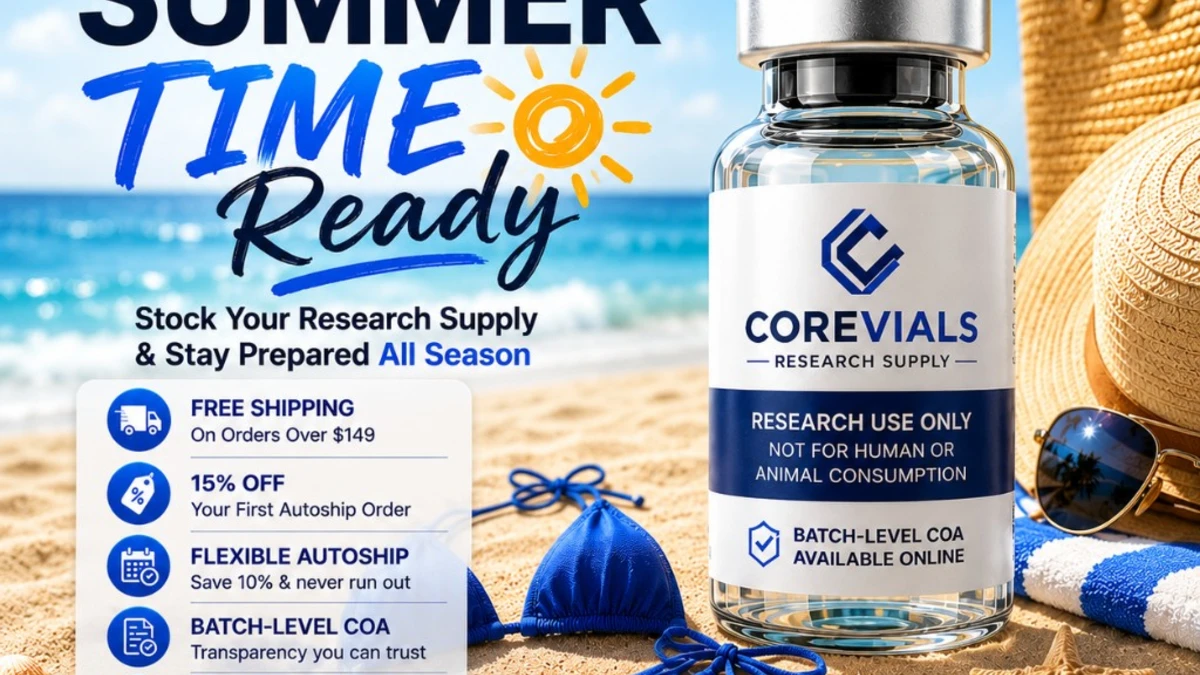
If you have browsed research peptides, you have probably seen "blends" listed next to single peptides and wondered what the difference is. Here is a simple guide to what a peptide blend is and what to look for before buying one.
What Is a Peptide Blend?
A peptide blend is simply two or more peptides combined in a single vial. Think of it like a combo pack instead of buying each item separately. Researchers use blends when they want to study certain peptides together rather than one at a time.
Common Blends You'll See
Some combinations come up a lot in laboratory research. A few you will recognize in our blend protocol library include:
- BPC-157 + TB-500, frequently studied together in recovery and tissue-repair research
- CJC-1295 + Ipamorelin, a commonly paired growth-pathway research combination
- GLOW and KLOW, multi-peptide blends studied as all-in-one research vials
These are listed only to describe what is commonly studied, not as any claim about effects. Everything is for laboratory research.
Single Peptides vs. Blends
A single peptide gives a researcher one variable to study. A blend bundles a few together, which can be convenient for certain experiments. Which one a lab chooses depends entirely on what it is studying, neither is automatically "better."
How to Buy a Peptide Blend (What to Check)
- Read the COA. A blend should still come with batch documentation. Check it the same way you would for a single peptide, see how to read a COA.
- Purity and identity. Make sure the report shows the peptides are clean and correctly identified. Here is what purity means and how identity is confirmed.
- Clear labeling. The vial and listing should clearly state which peptides are in the blend and how much of each.
- Reputable supplier. Look for a seller that provides supplier batch documentation when available.
- Proper storage. Blends are handled like other lyophilized peptides, see our storage and handling guide.
Where to Look
You can browse available research peptide blends in the CoreVials shop, and review reconstitution and mix references in the blend protocol library.
Common Questions
Are blends cheaper than buying singles? Often a blend is priced as a convenient bundle, but it depends on the specific products.
Are peptide blends for personal use? No. Research peptide blends are for laboratory research only and are not for human or animal consumption.
New to peptides? Start with what peptides are, then what a COA is.
Sources
- U.S. Pharmacopeia: peptide quality and testing standards
- U.S. Food & Drug Administration / ICH Q6A: specifications and acceptance criteria
Research Use Only. Not for human or animal consumption. This article explains research products and lab paperwork and is not medical, dosing, or usage advice.