A Certificate of Analysis (COA) can look intimidating, but you really only need to check a handful of things. Here is a simple, step-by-step way to read one. (If you want the big picture first, start with what a COA is.)
Step 1: Match the Batch Number
Find the batch (or lot) number on the report and make sure it matches the number printed on your vial. If they do not match, the report is for a different batch and does not describe what you have.
Step 2: Find the Purity Number
Look for a percentage — this is the purity. For research-grade peptides, 98% or higher is the common standard. Want the details? See what purity actually means.
Step 3: Check the Identity Result
A good COA also confirms the peptide is the right molecule, usually by showing an expected weight next to a found weight. When they match closely, identity is confirmed. Here is how that check works.
Step 4: Glance at the Graph
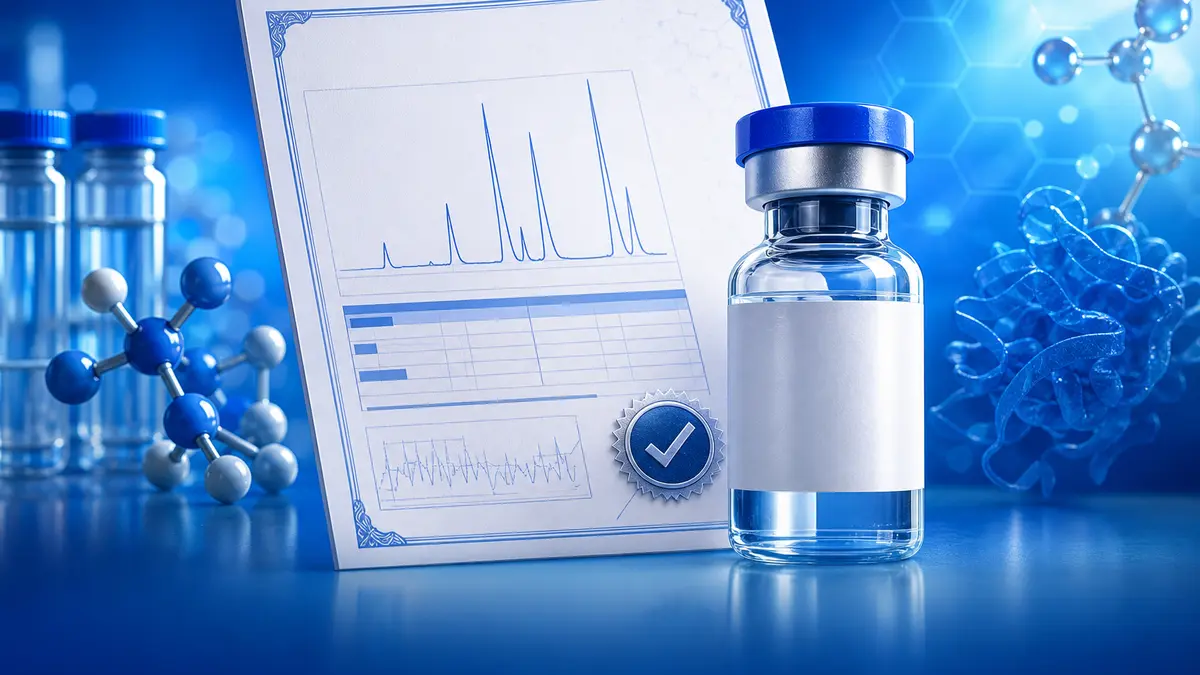
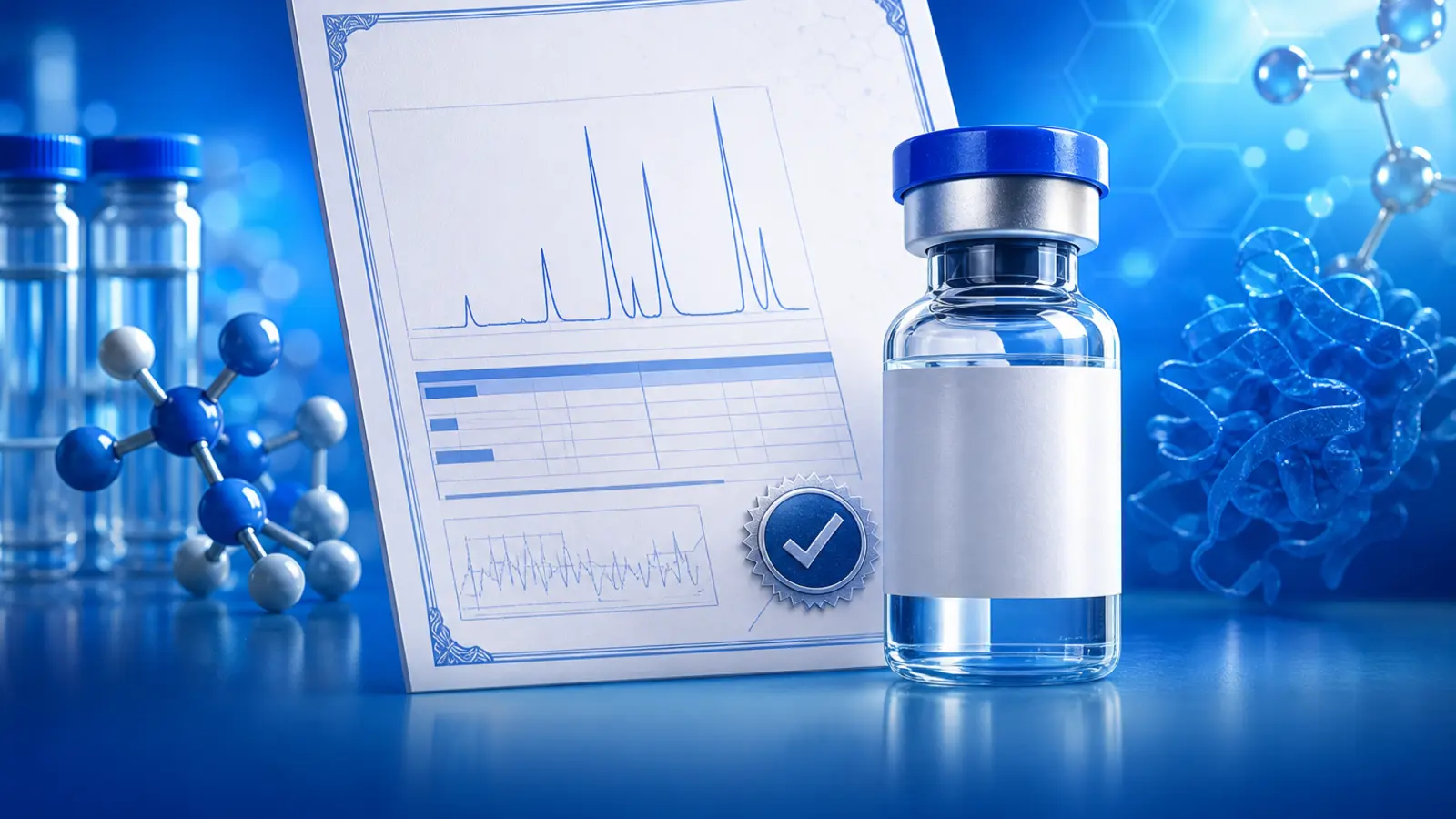
Many COAs include a chart called a chromatogram. You do not need to interpret it like a scientist — just know what "good" looks like: one tall, clean spike (that is your peptide) with only small bumps around it (minor leftovers). One dominant peak on a flat line is a healthy sign.
Step 5: Check the Date
A recent test date is reassuring. Very old or missing dates are worth a second look.
Red Flags to Watch For
- No batch number, or one that does not match your vial
- A purity percentage with no test method behind it
- No identity check at all (purity only)
- A generic, undated document that could apply to anything
Common Questions
What if there is no chromatogram? A graph is a nice extra, but the batch number, purity, and identity results are the essentials.
Does a clean COA mean it is safe to consume? No. A COA covers identity and purity for laboratory research only. These products are not for human or animal consumption.
Sources
- U.S. Pharmacopeia — peptide testing and quality standards
- U.S. Food & Drug Administration / ICH Q6A — specifications and acceptance criteria
Research Use Only. Not for human or animal consumption. This article explains lab paperwork for laboratory research and is not medical, dosing, or usage advice.