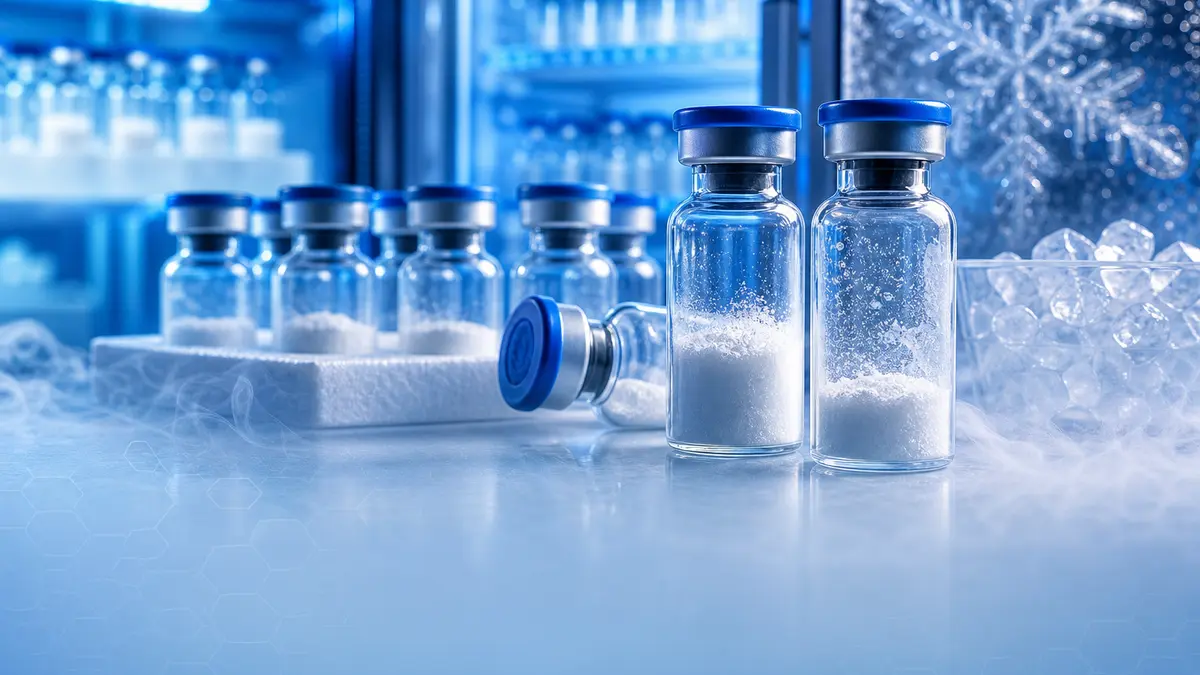
Bacteriostatic water (often called BAC water) is sterile water that usually contains about 0.9% benzyl alcohol. The benzyl alcohol is a preservative that helps slow bacterial growth after a vial is entered more than once.
CoreVials bacteriostatic water is for laboratory research use with research materials, not for personal medical protocols.
Why do peptide labs use it?
Many lyophilized (freeze-dried) peptides are reconstituted once, then sampled across several experiment days. Each needle entry is a contamination risk.
A preserved multi-draw diluent is one standard way labs reduce that risk while keeping a working solution available. Preservative-free sterile water is different and is usually treated as a single-use style diluent.
Basic lab handling tips
- Wipe stoppers with 70% isopropyl alcohol and let them dry before puncture.
- Use a new sterile needle and syringe for each access when your protocol requires it.
- Add diluent slowly down the vial wall. Swirl gently. Do not shake hard.
- Label concentration, date opened, and compound ID immediately.
- Store according to your protocol, commonly refrigerated for many reconstituted research solutions.
A common in-use discussion window for benzyl-alcohol preserved multi-dose diluents is about 28 days after first puncture under proper technique. That window is about microbial control, not a guarantee of peptide potency for every compound.
When might BAC water not be the first choice?
Some assays or sensitive proteins do not tolerate benzyl alcohol well. Some copper-binding or aggregation-prone systems may need a different diluent. Check the compound literature and your assay constraints before assuming one solvent fits all.
Related tools
Use the research volume helper for concentration math, and review peptide storage and reconstitution for broader handling context. For documentation habits, see COA lookup.
References
- USP-style product definitions for bacteriostatic water for injection describing sterile water with benzyl alcohol preservative for multi-dose use.
- Standard aseptic technique guidance for multi-dose vial access in laboratory and compounding practice literature.
- CoreVials laboratory education: peptide storage and reconstitution guide.